
Iroko Gates Explained: What Makes This Hardwood Stand Out?
Spend any time looking at hardwood gates and Iroko is a name that comes up quickly. Its warm colour and visible grain are part of the attraction, but appearance is only one reason the timber works well for gates. Iroko is also naturally durable and well suited to exterior use.
For homeowners looking at bespoke wooden gates, that balance is important. A gate is part of the look of a property, but it also has to spend every day outside. Understanding how Iroko looks, performs and changes over time makes it easier to decide whether it is the right hardwood for your entrance.
What is Iroko Hardwood?
Iroko comes from tropical Africa and has long been used for applications where durability matters, including exterior joinery and boat building.
The heartwood typically ranges from yellow-brown through to deeper brown tones. Its grain can be straight or interlocked, with a medium-to-coarse texture. That natural variation is part of the material rather than a flaw, so an Iroko gate will not have the completely uniform appearance of a manufactured product.
Colour, Grain and Natural Variation
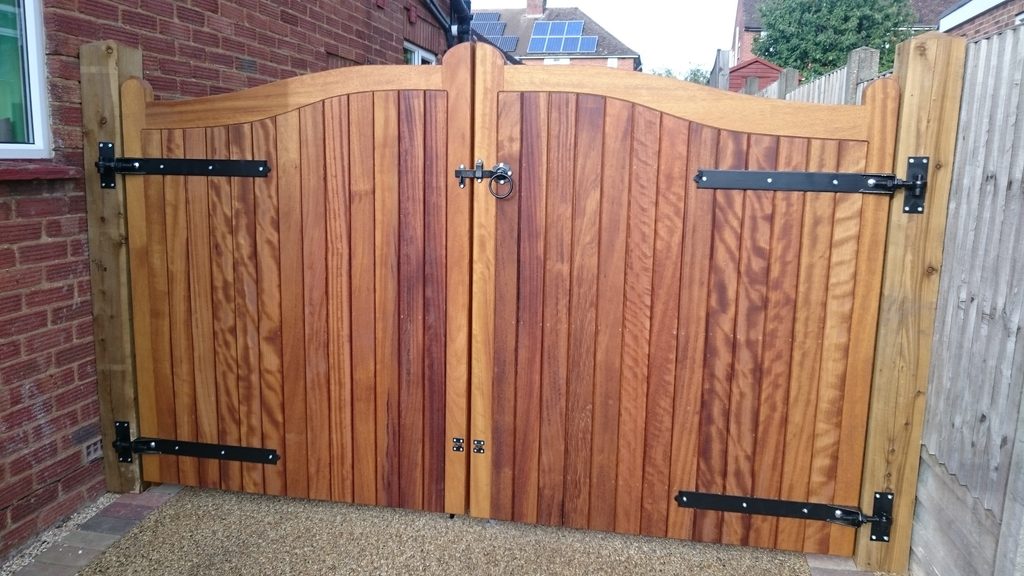
Appearance is one of the clearest reasons homeowners are drawn to Iroko hardwood gates. The timber has a warm, golden-brown character that can work across both traditional and more contemporary gate designs.
On a simple gate, the grain can do much of the visual work. On a more detailed or traditional design, the timber brings warmth without needing an elaborate finish. Because the colour and grain vary naturally from board to board, the finished gate has a more individual appearance than something produced from a completely uniform material.
Durability in Outdoor Settings
Unlike indoor joinery, a gate is exposed to rain, sunlight and seasonal changes throughout the year. The timber therefore needs to be chosen with outdoor performance in mind.
Iroko is recognised as a durable hardwood with good weathering properties and is commonly used for exterior joinery. Its suitability for outdoor use is one of the main reasons it makes sense as a material for garden, entrance and driveway gates.
That does not mean the timber is maintenance-free or unaffected by the weather. It means the material itself is well suited to the job. For homeowners investing in a bespoke wooden gate, starting with a timber that is naturally appropriate for exterior use can be a practical advantage.
How Iroko Weathers Over Time
Iroko changes colour as it is exposed to light and weather. Left to weather naturally, the surface gradually develops a silver-grey tone. Regular oiling helps retain more of the warmer golden-brown appearance.
Neither look is inherently better. Some homeowners prefer a gate that keeps a warmer, freshly oiled appearance, while others like the softer look that develops as timber weathers naturally.
It is simply worth knowing what to expect from the material. An Iroko gate is not something that remains visually frozen from the day it is installed; like most natural timber used outdoors, its appearance develops with age.
How Can Homeowners Maintain Iroko Hardwood Gates?
How you look after an Iroko gate depends partly on how you want it to look.
Crocketts Gates applies a base coat of teak oil containing UV filters to its Iroko gates. This brings out the golden-brown colouring and natural grain of the timber. Regular re-oiling is recommended where you want to retain that richer tone.
Basic cleaning matters too. Dirt and debris naturally build up on outdoor timber, so keeping the surface clean and checking the finish periodically is a sensible part of routine care.
Why Iroko Suits Bespoke Wooden Gates?
With a bespoke gate, the timber and the design need to work together. A broad driveway entrance calls for different proportions from a narrow side or garden gate, and the style of the property matters too.
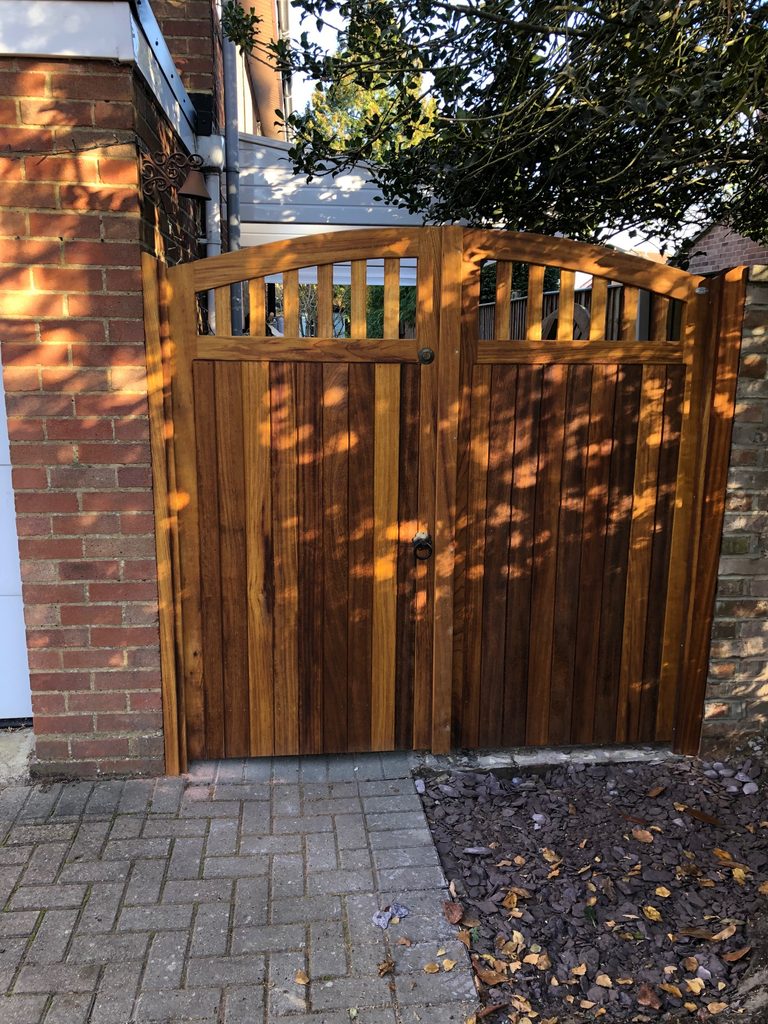
A traditional property may suit more detailing, while a contemporary entrance might work better with cleaner lines. With a made-to-measure design, the character of the Iroko timber can be considered alongside the size, shape and style of the gate rather than separately.
You can also see how the timber looks across different designs in Crocketts Gates’ Iroko hardwood gates range.
Choosing Iroko for Your Property
Iroko is worth considering if you like the character of natural hardwood and want timber that is well suited to outdoor use. Its grain and colour will vary, and its appearance will change as it weathers, so it is a material that develops rather than staying completely uniform.
If that natural character appeals to you, Iroko can work particularly well for a bespoke gate designed around the proportions and style of your property. To explore the options, speak to the team about a made-to-measure design for your entrance.
FAQ
Is Iroko the same as teak?
No. Iroko and teak are different timbers. Iroko is sometimes referred to as “African teak” because of similarities in appearance and some of the ways the timber is used, but they come from different tree species.
Can you paint or stain an Iroko gate?
Iroko can be finished in different ways, although Crocketts Gates uses teak oil with UV filters on its Iroko gates to retain the natural grain and golden-brown appearance. If you want a painted or stained finish, it is worth checking that the chosen product is suitable for smooth-planed hardwood before applying it. Some water-based fencing finishes may not be suitable for this type of timber.
How long do Iroko gates last?
With good construction, installation and regular maintenance, Iroko gates can last for decades. Crocketts Gates notes that a well-maintained hardwood gate can last 30 years or more, although the actual lifespan will depend on factors such as exposure to the weather, ongoing care and how heavily the gate is used.
Is Iroko suitable for driveway gates?
Yes. Iroko is well suited to driveway gates because it is strong, durable and naturally suited to outdoor conditions. It can also be made to measure, which is particularly useful for wider entrances where the proportions and construction of the gate need to suit the opening.